Many food brands choose a testing lab the way they choose any supplier. They compare price, turnaround, and accreditation.
Those are the right things to check. They answer one question: can this lab run a test well?
They leave a second question open: who runs the program that the test belongs to?
In short, an accredited lab is responsible for running each test correctly within its scope. Under FDA’s preventive controls rule, the facility remains responsible for the testing program: which tests to run, how each sample ties to a lot, how often to test, and what to do with each result. Choosing a food testing partner means checking both.
What a lab is responsible for
ISO/IEC 17025 sets requirements for a lab’s competence, impartiality, and consistent operation. An accredited lab shows that it can run the methods in its scope and report results it can stand behind. That matters a great deal. See Why Your Lab Results Are Only as Good as the Lab Behind Them.
Accreditation covers the lab’s work. It does not decide which hazards your product has, which samples to send, how often to send them, which limit applies, or what to do with a result.
What the program is responsible for
FDA’s preventive controls rule puts those decisions on the facility. For product testing, the facility’s written procedures must identify the test and method, the laboratory, how each sample relates to a specific lot, how many samples to take and how often, and the corrective actions. The laboratory is one line in a longer procedure.
A qualified individual must also review the records. Monitoring and corrective action records are reviewed within seven working days, or within a reasonable time with a written justification. Testing records are reviewed within a reasonable time.
For dietary supplements, FDA expects the maker to set specifications, including limits on contamination, and to verify finished batches against them. FDA warning letters cite firms that did not.
NACMCF says the same about microbial limits. Each firm sets its own targets and limits based on its facility, ingredients, process, packaging, and shelf life.
The lab runs the test. The brand owns the program.
What goes missing when you buy a lab, not a program
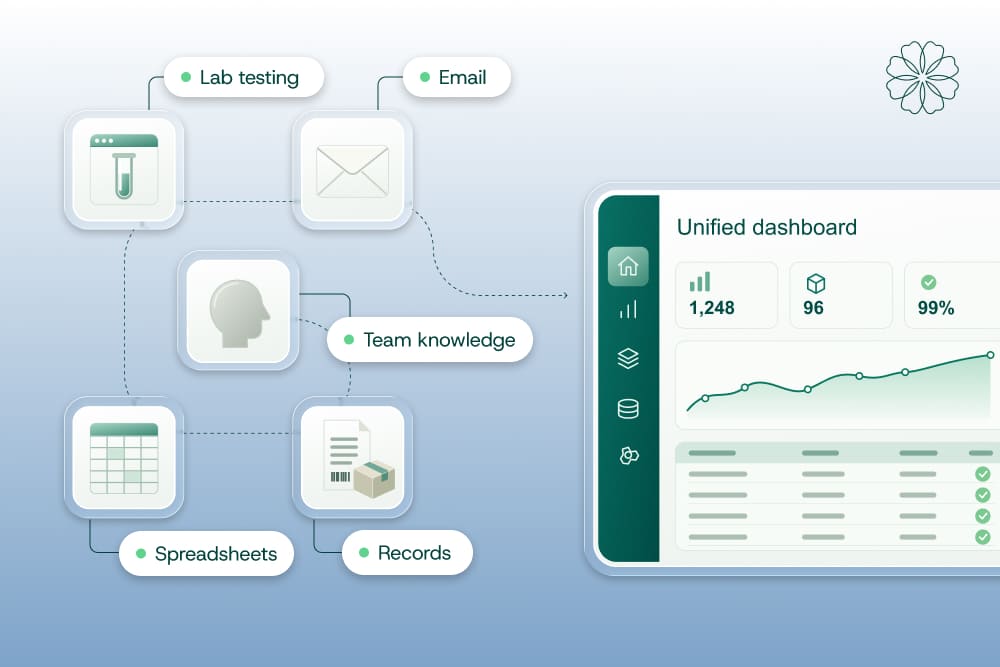
- Results sit in lab portals. Each lab has its own login and format, so a full picture means checking each one by hand.
- Nobody trends across labs. NACMCF says results should be analyzed for trends on an ongoing basis. Across several portals, that is manual work.
- Chain of custody splits between the lab and the courier. Each holds part of the record.
- Sample-to-lot links depend on people. The rule expects procedures that tie each sample to a specific lot, and spreadsheets often carry that link.
- Records take time to assemble. FDA lets a facility keep records offsite only if they can be retrieved onsite within 24 hours of a request. For foods on the Food Traceability List, FSMA 204 will generally require records within 24 hours once it takes effect in July 2028. See why lot codes and test results belong in the same system.
- Method choice falls on the brand. FDA’s draft guidance recommends a method shown to give reliable results in the food being tested, and someone has to check that.
What a platform adds
A platform joins accredited testing, connected software, logistics, and managed services in one system. In practice, it can mean:
- One record per sample and lot: the result, method, COA, chain of custody, and corrective action in one place.
- Trends across suppliers, facilities, and time, without exporting spreadsheets.
- Panels matched to the product and its risks, with scientists available when a result needs interpretation.
- Next-day results on most tests, so hold and release decisions can be made the next day.
- One monthly flat fee that includes shipping, supplies, and retests. The cost breakdown shows how a fragmented program adds up.
- Documentation ready to export when a retailer or regulator asks. See retail testing readiness.
When a lab alone is enough
A lab alone can be the right choice for a one-time need, such as a single panel for a retailer qualification or a one-off ingredient check.
The picture changes when testing becomes routine across products, suppliers, and sites. That is when the program decisions, the records, and the trends start to matter more than any single result.
Questions to ask a testing partner
- Who decides which tests to run on each product and how often, and where is that written down?
- Where do results, COAs, chain of custody records, and corrective actions live, and how many systems is that?
- Can you see trends across suppliers, sites, and time without building a spreadsheet?
- How long would it take to produce the full record for one lot?
- Who responds when a result is flagged, and how fast?
- Is every method inside the lab’s accredited scope?
- What does the fee include: shipping, supplies, retests?
A lab can answer the last two well. A program answers all seven.
The bottom line
Choosing a lab tells you the test will be run well. Choosing a program tells you the result will be used well.
Genista is built for the second. Our ISO/IEC 17025 accredited scope covers the first. Our operating system for product safety, with accredited testing, robotic automation, connected software, and services in one closed loop, covers the rest, instead of stitching together 3+ vendors.